The earliest history of man consuming tea as a beverage can be traced back at least 4700 years. Exactly how long ago its healthful properties were first discovered cannot be ascertained, but its beginnings are typically attributed to the mythical Chinese emperor Shên Nung.
Shên Nung is often referred to as the father of Chinese herbal medicine, reputedly spending much of his lifetime afield searching for new herbs from which to concoct remedies for the many maladies that affected his subjects. One day, the Emperor found himself especially fatigued from his endeavors, and stopped under a tree to light a fire to sterilize the water he was about to consume as a refreshment. As fate would have it, a couple of leaves fell from the tree and into his pot of water.
The Chinese were solely responsible for the development of tea over the first 3400 years of human awareness of the plant. They oversaw the transition of the herb from a medicine to a beverage and developed a succession of methodologies for growing, processing and preparing the leaf. The result of their efforts is visible to us today in the way we steep whole leaves and drink the simple infusion that is produced – a style of preparation that wasn’t fully developed until the Ming Dynasty (14th-17th centuries A.D.).
Tea was first established outside of China in 705 A.D. when it was brought to Japan by the Buddhist monk Dengyo Daishi. It wasn’t until nearly 400 years later that tea cultivation was begun in earnest on the island. Concurrently, tea in China had reached its “Golden Age” during the Sung Dynasty. The Chinese were drinking teas that had been ground into a powder and whisked into bowls of hot water before consuming. The Japanese adopted this methodology as their own then went on to perfect the preparation technique. This ancient style of tea preparation still manifests itself today in the form of the Cha do – the Japanese way of tea.
By the 1600’s, Chinese tea was being exported to Russia, then Western Europe. The Dutch East India Company was the first vehicle for this trade, followed closely by the British East India Company. Both of these firms spurred the rapid growth in tea consumption by westerners by establishing their own tea plantations in India, Indonesia, and Ceylon – simultaneously increasing both the supply of and demand for the leaf. Tea was sold to Westerners through the already–established coffee houses of London and Paris and other major European cities. Tea quickly supplanted coffee as the beverage of choice, and began making its way across the sea to the European colonies abroad. By 1690, tea was being sold to the American colonists in Boston. Americans quickly became avid tea-drinkers, with higher per capita consumption rates than their British counterparts. Ironically, Boston also became the site of the end of the American love-affair with tea when the colonists dumped an entire tea-shipment into the harbor in 1773 – an act with repercussions that precipitated the Revolutionary War with Great Britain just 2 years later.
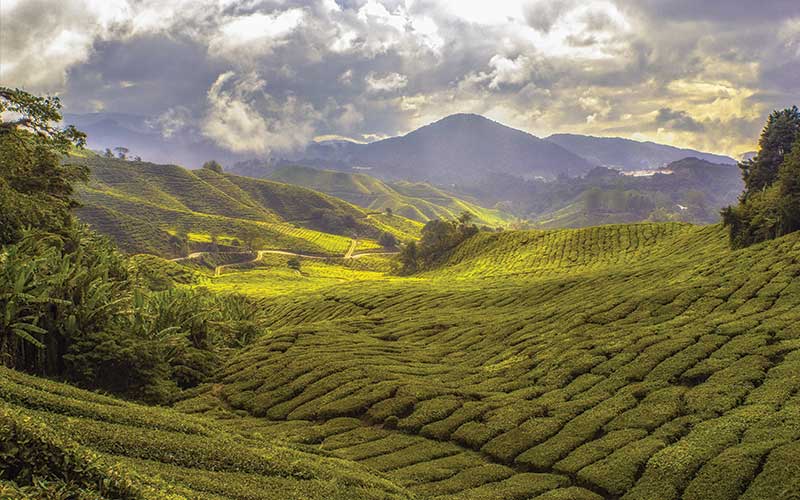
Today tea is the second most-consumed beverage in the world – being just behind water in the rankings. It is cultivated and consumed all over the world, with plantations being found in India, China, Sri Lanka, Kenya, Turkey, Japan, Vietnam, Indonesia and Argentina just to name a few. Tea’s popularity is on the rise even here in the ‘coffee–stronghold” of the United States as millions of people are now turning to its great taste and healthy benefits as a beverage, and adopting its soothing characteristics as an integral part of their lifestyles.