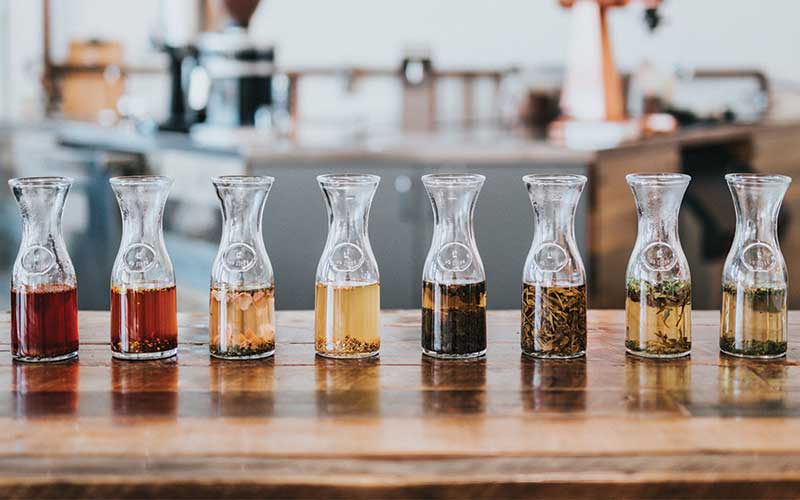
Tasting tea is not unlike tasting wine. There are many nuances in appearance, aroma and flavor to be considered when one is trying to discern quality in a particular varietal. The key to an objective tasting is not to harbor preconceived notions about what you expect the tea to taste like, be open to what the tea actually presents to your senses. Also, it will be important to approach the tasting with a “scientific methodology” in mind. In other words, be sure to use precise measurements in regard to water temperature, steeping time and quantity of leaf (weight measurements are more accurate than volume measurements for tasting purposes).
This way you will be comparing “apples to apples” when judging the quality difference between several First Flush Darjeelings, for example, if each sample is measured and prepared identically to the others.
Often times it is best to reduce your observations to writing as you taste each tea. This practice seems to force one to give careful thought to the teas characteristics, plus it gives you a journal to refer back to should your memory or palate become muddled in the midst of the tasting.
Points to consider while evaluating the teas include the following:
Appearance
- Dry Leaf
- Infused Leaf
- Brewed Liquor
Aroma
- Dry Leaf
- Infused Leaf
- Brewed Liquor
Taste
- Brewed Liquor
Professional cupping sets are perfect for this exercise, but making individual traditional cups will suffice as well if you have a small white saucer on which to display the infused leaf. White is also the best choice for cup color, as its neutrality serves to best display the true color characteristics of the liquor.
Begin by evaluating the appearance and aroma of the dry leaf. Note the shape and color of the leaf itself. Try to describe the aromas that the leaf presents to you in terms of smells with which you are already familiar.
The next step will be to steep the leaf. When the brew is ready, display the steeped leaf on the lid of your cupping set or on your saucer. Evaluate the appearance and aroma of the steeped leaf first, then the appearance and aroma of the brewed liquor. Save the tasting ‘til last. This will allow the liquor to cool to the point where your palate will best be able to detect all of the nuances in flavor.
When tasting the tea, be sure to “slurp”. By drawing air into your mouth at the same time that the liquor is entering the same, you will be able to more fully detect the many flavors that had been locked in the leaf until you released them.
Allow the liquid to hit all the regions of your palate before swallowing, then as you do, breathe out through your nose simultaneously. You must involve your sense of smell if you truly want to taste the tea. Pay attention to the differences in flavor from when you first detect the taste of the tea (foretaste) and the lingering effect of the tea on your palate after you’ve swallowed (finish). Try to describe the tastes and effects in terms of “feel” on your palate. Is it floral and astringent, or chocolaty and malty with a big mouth-feel? We recommend that you describe your impressions in words that mean something to you, but we’ve also included some genuine tea tasting terminology below should you like to incorporate these words into your tasting exercises at some point.